Previously I mentioned that there are a variety of ways to try and manage your mental health a bit better. Most of these things are ways that I haven’t tried yet that I wanted to explore and document my experience with in hopes that it might help someone else. The first “method” I tried for my inquiry was swimming!
In my introduction I talked about how one of my passions is swimming and exploring new beaches and coves. Moving to Victoria has provided me to opportunity to go outside and discover some new secret spots which has been such an enjoyable experience. I also realized that when I am out in the water, my anxiety levels seem to go way down and I am able to relax a bit.
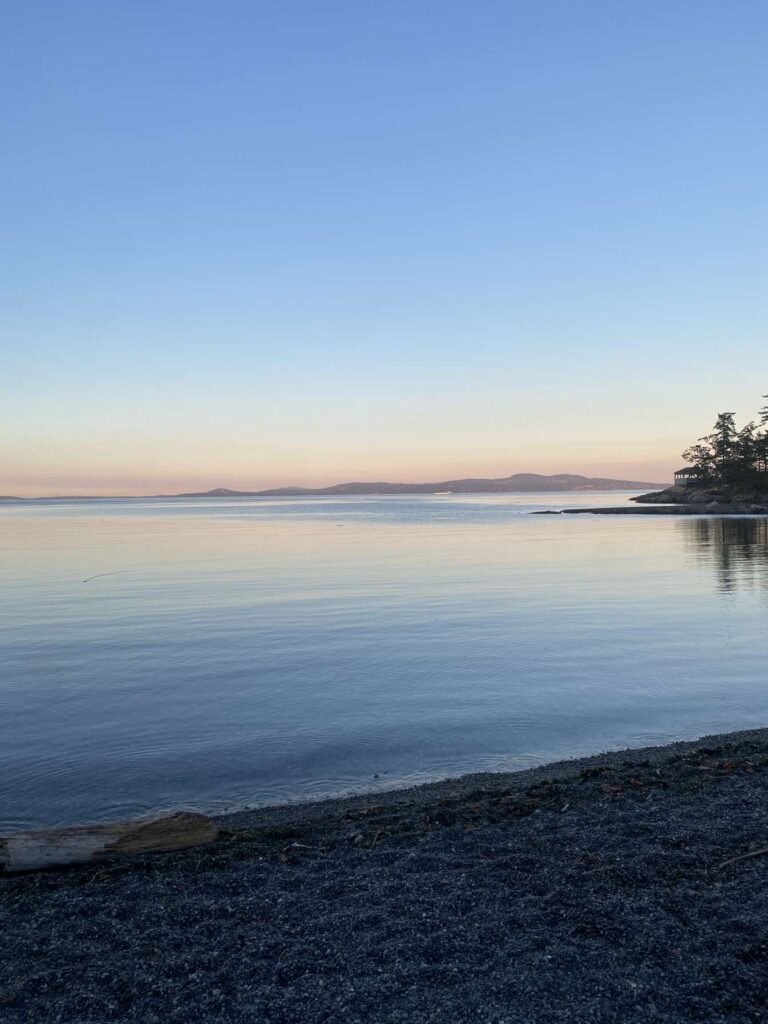
Besides being surrounded by diverse wildlife, the leaning arbutus trees, and the last bit of summer sun, I wanted to see if there was another reason why I was so at peace when I was at the water. After doing some research I discovered that there has been studies that prove how cold water has positive impacts on both physical and mental health. Cold water can act as a natural anti depressor as it “activates the sympathetic nervous system and increases the concentration of norepinephrine and β-endorphin” (Knechtle et al.) In less “sciency” terms, cold water activates the parts of your brain that cause you to feel happy and calm and therefore reduces stress and depressive emotions.
Alongside this, cold water also can benefit you physically which could also lead to a potential of improvement of mental health problems. Research has shown that cold water can help regulate metabolism, build immunity, and act as an anti-inflammatory (Cold water swimming: 5 reasons why you should just go do it). These are just a few of the added health benefits but I encourage you to follow the links posted below to see the whole list (there are quite a few!)
While there are many benefits, the links below also include some of the possible dangers swimming in cold water could cause. Before diving into the water make sure you are aware of both the pros and cons and decide if this is something that is safe for you to do.
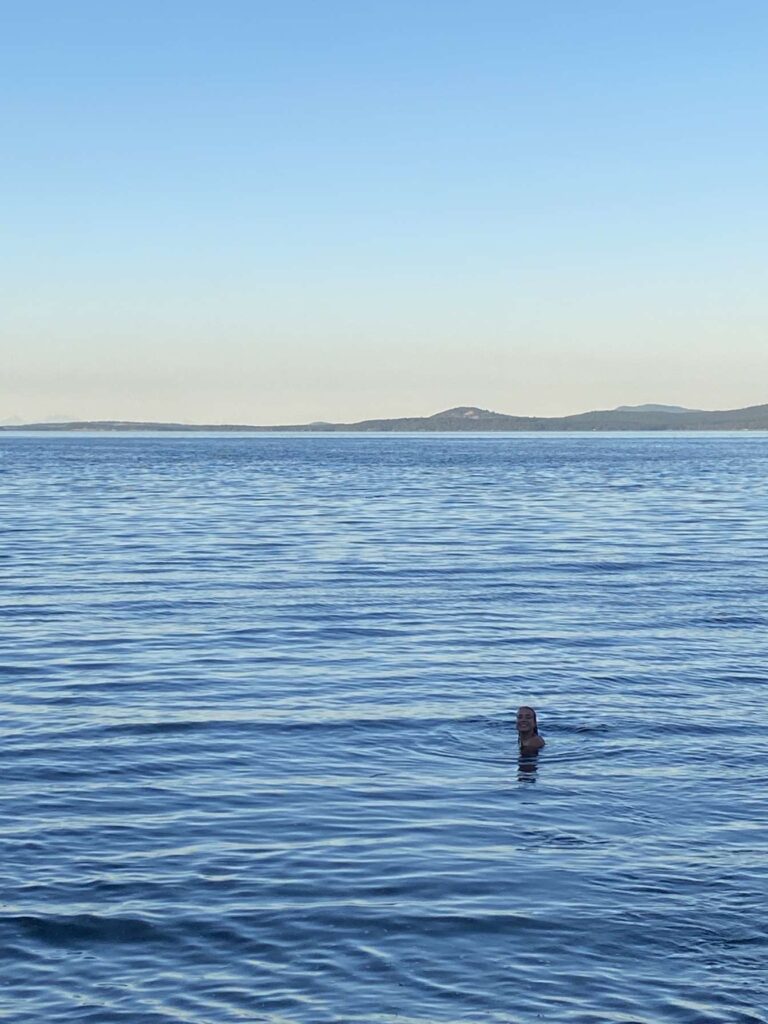
With all of this in mind, I decided to test this out by going swimming every night for a week. I walked down to a cove located about 10 minutes (walking) from my house and went swimming for about 25 minutes. At first the water was so cold I wasn’t sure if I would be able to continue for the rest of the week, but I will admit the shock of the coldness did force me to forget all my anxieties for a brief moment. Once I got used to the water I was able to float and swim around for awhile. I noticed I was forced to focus and control my breathing which is a useful practice when learning to try and gain control over anxiety. Floating in the water also felt extremely peaceful as I was able to step back temporally from the “busyness” of life and be held up and supported by the force of the water.
Overall, swimming in the ocean was a very positive and effective method that helped with my mental health. It allowed me to use something that I love doing and use it to deal with something that I struggle with. I realize this is not something that will work for everyone, or that is even possible for some people, but if it is something that interests you, and you are careful with how you do it, I highly recommend!
Sources
Knechtle, B., Waśkiewicz, Z., Sousa, C. V., Hill, L., & Nikolaidis, P. T. (2020, December 2). Cold water swimming-benefits and risks: A narrative review. International journal of environmental research and public health. Retrieved September 26, 2022, from https://www.ncbi.nlm.nih.gov/pmc/articles/PMC7730683/
Posted on January 20, 2021. (n.d.). Cold water swimming: 5 reasons why you should just go do it. Fraser Riverkeeper. Retrieved September 26, 2022, from https://www.fraserriverkeeper.ca/cold_water_swimming_5_reasons_why_you_should_just_go_do_it
Leave a Reply
You must be logged in to post a comment.